Analysis of the popurrí of La ciudad invisible
Analysis of Antonio Martínez Ares's popurrí this year, 2023, with his comparsa «La ciudad invisible», focusing on the performance, musically splendid and full of comparsa details from the 1990s.
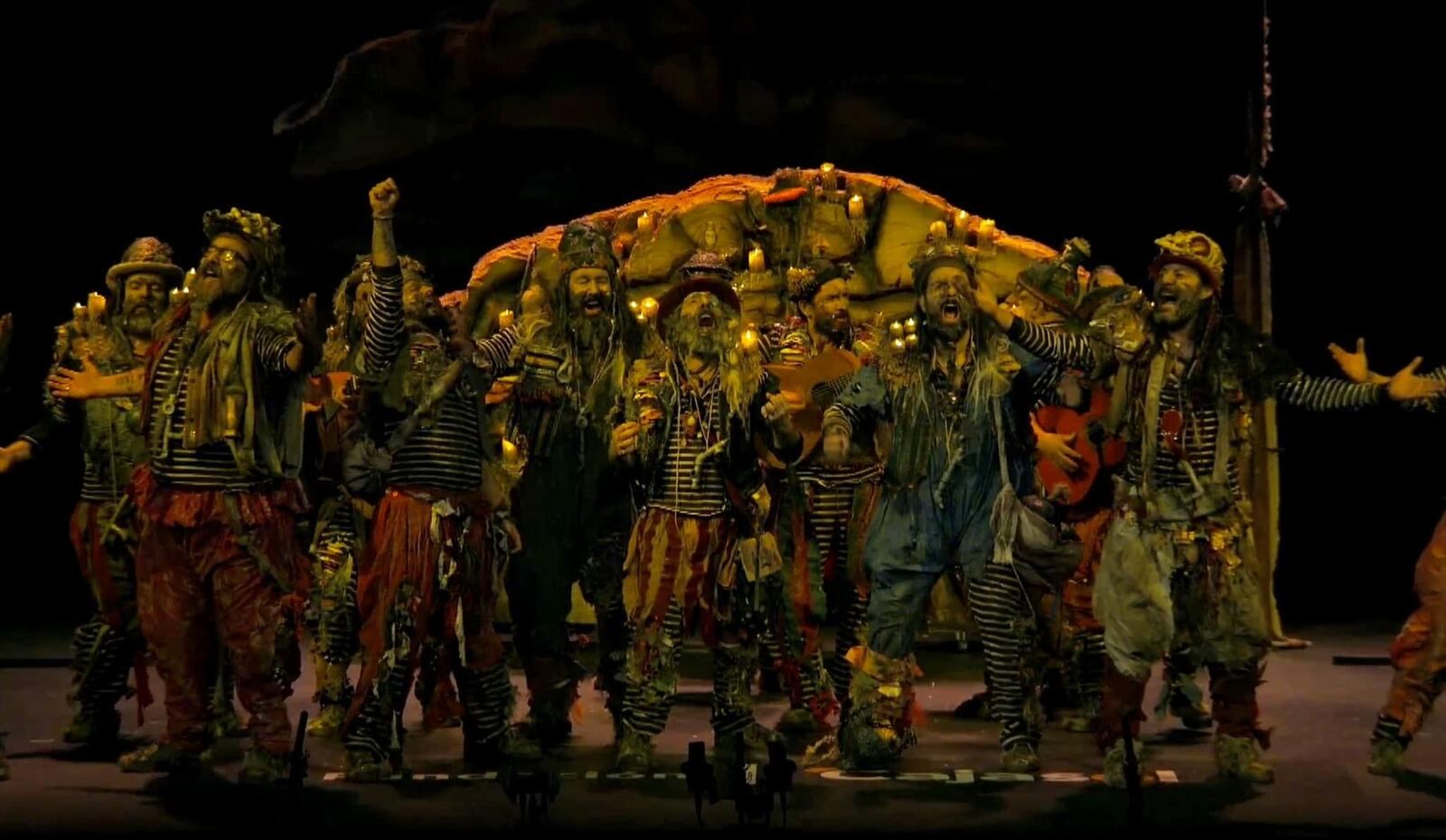
Analysis of Antonio Martínez Ares's popurrí this year, 2023, with his comparsa «La ciudad invisible», focusing on the performance, musically splendid and full of comparsa details from the 1990s.
First cuarteta
Un día mas
Cavando túneles
Y rutas en la tierra
Pero soy libre
No habrá dios que me detenga
No hay nadie, nadie
Que silencie mi canción
¿Vamos bien señor director?
Es por aquí
No hay confusión
In the presentación of Los Piratas from 1998, Ángel Subiela (the director), in the tipo of the leader of these buccaneers, says “it's this way, there's no confusion”
¿Cuánto hace ya?
Un día mas
Algo he dejado en el polvo del martillo
Al menos te deje mi amor ese estribillo
Ese estribillo
De eso no me acuerdo yo
Illo ni yo
¿Cómo qué no?
Neither Ramoni nor Cateto were in the comparsa of the sumisos the year before. Hence this meta-Carnival reference once more, to the supposed forgetting of the estribillo of 2022
Vienen malos tiempos
Es el momento de volver a las raíces
Que reconectar
Con el pasado más sagrado
Abajo el muro
Abajo el muro
Hay que existir
Here Antonio may be vindicating or arguing for the general tone of the comparsa by looking back at his comparsas of the nineties. Most likely because of how close in time he created his new anthology “la comparsa miserable”
Este carnaval
Lo voy a vivir en el subsuelo
Desentrañare lo que más quiero
Lo que más quiero
Este carnaval
Y los que hagan falta
Si es preciso
En las tinieblas
Hay paraíso
Back to the tipo, on the dynamic of surviving in the caves, fleeing the repercussions of having escaped from the prevención. The tipo answers to some fugitives who live underground, in the gloom, in the dark.
Dale duro
Dale duro
Duro hasta la eternidad
Falta poco
Ya se mueve, ya
A puntito esta
A puntito esta
COROS (Son son son, de la revolución)
A tribute to the presentación of la revolución in the coreaos https://youtu.be/58vxuDy6oR4?t=130
Ya estamos aquí otra vez
Cielito al pie del cañón
A tribute to the presentación of his comparsa El Vapor
¿Qué no?
Un día mas
Según se mire compañero
Un día menos
Second cuarteta
Mira, mira, mira
El muro cayó
Cayó
Aquí abajo, aunque no lo creas
Estoy al día de lo que ocurre
En el exterior
Con mi radio yo busco el mundo
En mi micromundo
Solo hay que echarle imaginación
Musically, these two stanzas remind me of a reconstruction of the first part of the estribillo of la trinchera
“Suena una corneta
entre las piedras
alguien se acerca
por el camino de la playita.”
Sigo las leyes de la resistencia
Interferencias
Aquí abajo la cobertura
Es una tortura
Pero eso a mi
No me va a parar
Niño saca la antena gorda
Y la papa vieja
Que en un ratito funcionara
Sigo las leyes de la vieja guardia
Si no hay candela
Pues a inventarla
In a narrative tone, it describes how they manage to find out the news of the outside world. As you can see in the set, by trying to hook up an old radio.
Las tuberías son otro recurso
Todo lo largan
Sin filtro y sin gusto
Son las miserias
De la vida misma
Que van derechitas a la mar
Another method is to follow people's conversations through the pipes, where what society really thinks comes to light from the privacy of their homes.
Tú no te muevas
No pierdas la copa
Abajo arriba
Izquierda abajo
Ahí va la honda
Silencio todos
Que hemos cogido señal
At last they get that forgotten radio to pick up a signal and tell them what the miseries are of the world they remain strangers to from the darkness of the cave.
El ruso loco con su guerra
Toca techo la pobreza
La inflación un 7 y pico
Sanidad para los ricos
Los glaciares se derriten
La cultura se va a pique
Siguen matando a las mujeres
El amor es lo que tiene
El paro crece que da miedo
Que valiosos son los abuelos
Las calles llenas de sintecho
Apaga eso por favor
Quien fue el listillo que dijo
De esta saldremos mejor
Next, it lists the calamities we suffered, and are still suffering, during 2023. It ends on a lament, because it tells us how, after covid, there were people who believed we would come out of it better as a society.
Third cuarteta
Al bichito de la noche
Tu que entras
Tu que sales
Lleva el beso
de este preso
Hasta casa de mi madre
Ilumínale los sueños
A mi niño chiquitito
Y a mi amada dile pronto
Pronto volveré contigo
Baila para todos ellos
Con tu vientre
Floreciente
Que perdonen a un sumiso
Que se las dio de valiente
Lucecita piensa en mi
Como si fuera un emigrante
Esta empanao por verme loco
Al loquito del levante
Sal que cure mis heridas
La alegría de mi barrio
Mi coplilla pa los ratos
Cuando aparece el espanto
Un cuartito de esperanza
Dentro de una botellita
Un paseo por mis calles
El vaivén de mi playita
Ay bichito de la noche
Tu que sales y que entras
Tu que entras y que sales
Lleva el beso de este preso
De este preso
Hasta casa de mi madre
Lucecita, lucecita
Vuela libre
Vuela alto
Si te acuerdas a escondidas
Dame lumbre pa estos días
Y una libra de tabaco
Musically, this cuarteta is a delight, in which, in a moment of madness or extreme lucidity, the protagonist opens up and pours out his feelings to a firefly, the only animal that gives him a light among so many shadows.
Fourth cuarteta
Escucha el eco
Eco, eco
Eres invisible
De ti no se hacen eco
Solo playas, flamenquito
Y carnaval a palo seco
Un pozo de promesas
Tan viejo como hueco
Cementerio de pateras
Con los muertos de marruecos
It speaks of Cádiz. It laments the problems that are raised again and again, but fall on deaf ears. Like an “echo” it reverberates, amplifies, booms, but in the end that cry never leaves the cave. At most, it bounces back and fades away.
Eco, eco
Eco, eco,
Eco, eco
Cateto is impressive; personally it is the cuarteta I like best, not for its literary quality but for its musical quality, both in the melody and above all in the performance and musical direction.
I asked myself exactly this same question:
Pregunta seria:
¿El Cateto cuando respira en la cuarteta del eco @ComparsaAres?Cuanto más te ignoran señora
Mas me arremango
Y más me obsceno
Le canto las cuarenta
Con mi guitarra apunto matarices
No me caso con nadie
Con ningún político me hipoteco
Me fumo mis penitas
Vivo, lucho, sangro y peco
The character adds to this and justifies himself on how to respond to that metaphorical echo that is his life.
No digo que tu
Hagas lo mismo que yo
Pero si quieres para ti
Hay un arco
En mi canción
He does not urge the audience to shut themselves in a cave like the character, or perhaps like the author himself 😀, but invites them to become part of his copla.
Basta
Fuera
Corruptos
Ladrones
Para
La noria
O pares
O nones
Grita
Ladra
Mantente
En tus trece
Ahora
O nunca
Desobedece
Desobedece
Eooooo
Ioooo
Con tanto eco
Al final estamos perdidos
The device of listing concepts is curious and well judged. The magnificent, simple music, plus the measured reply of the second voice (as if it were an ‘echo’ answering him), creates a very dynamic and powerful ending, finally urging us to subvert the established order.
Fifth cuarteta
Que raro me falta el aire
El aire me está quitando
El aire dice me dice
Tu aventura está acabando
El aire provoca sueño
El aire y sus cuchillitos
En tu pico está el milagro
Pajarito, pajarito
One of the premises of this popurrí is that each cuarteta sticks to the tipo and takes a journey through the different stages the character goes through. In this cuarteta, the one before the final, the group really does sing ‘as if they were short of air’. They lower the tone, the performance is more intimate, and they even describe their physical sensation.
As for the bird, I guess it refers to their use in mines. They served as a detector of toxic gases, as a way of preventing poisoning or, rather, a rudimentary indicator of the level of those harmful airs
Que si muero hoy en esta galería
Para que habrá servío a este payaso
Tanta y tanta rebeldía
aire, aire, aire
Aire para cantarte
Porque me asfixia esta soledad
Aire para escaparme
de estas cuatro paredes
no puedo mas
Aire respiro aire
Sentir tu aire
Una última vez
Aire búscame aire
Un hilillo de aire para volver
Aire me falta el aire
Necesito el aire
Adiós tiene nombre de drama
El aire y sus cuchillitos
Pajarito guíame
Guíame, ayúdame
Compañero sálvame
Pajarito arriba
Una luz se ve
The fugitive begs the cave for a little air, wonders whether all that time spent in hiding was worth anything, and finally begs the bird to guide him towards the light outside.
Final cuarteta
Fin
Acabo la oscuridad
La salida ahí esta
Ole lo hemos conseguido
Se nota en la brisita del mar
Que pena me da dejar
Este escondite prohibido
A ver
Vamos a hacer un comité
Regresamos si o que
Estamos todos tarumbas
Ya votar
Pues por unanimidad
Nos quedamos dios dirá
En las catacumbas por rumbas
Adiós, adiós, adiós
No voy a la prevención
Me quedo aquí en lo oscuro
Porque en lo oscuro se está mejo
Adiós, adiós, adiós
No voy a la prevención
Me quedo aquí en lo oscuro
Esperando, esperando
Llegue el perdón
El perdón para verte
Cádiz del alma mía
El perdón pa mis noches
El perdón pa mi día
El perdón pa las coplas
Hechas en libertad
El perdón que concede
El bendito carnaval
Adiós, adiós, adiós
No voy a la prevención
Me quedo aquí en lo oscuro
Porque en lo oscuro se está mejo
Adiós, adiós, adiós
No voy a la prevención
Me quedo aquí en lo oscuro
Esperando, esperando
Llegue el perdón
Viva España
Que rima con
Illo
Adiós, adiós, adiós
No voy a la prevención
Me quedo aquí en lo oscuro
Esperando, esperando
Llegue el perdón
The end arrives. They have found a way out and have to decide to stay outside for good. But it seems they prefer to wait for a possible pardon inside the cave or, as they put it, “las catacumbas por rumbas”.
An ending with the same purpose (but in rumba style) as the last cuarteta of the sumisos' popurrí.
In short: a splendid popurrí, a little weaker in its writing for a Martínez Ares (though anyone who wasn't Antonio would kill to have written this), but in performance and musically it is a jewel worth framing, packed with hundreds of nuances and with tributes, conscious or unconscious, to his comparsas of the 90s. In short, a wonderful gift for every Carnival fan.
Keep reading
Analysis of the popurrí of La Oveja Negra
I'm back once again with a literary analysis with philosophical overtones (the music I leave to the musicians), written from the subjectivity of someone who is trying to offer a view of the text and subtext without fanaticism or academicism.

Learning Web Components
What are Web Components? Web Components are a group of standard web technologies that let you create reusable custom elements with their own structure, style and functionality, completely encapsulated and isolated…
Carnival: Analysis of the popurrí of Los Sumisos
The bass drum gives way to the snare, the cymbals in the form of a tinkle, the guitars prepare the arrival of the punteao, a sound closer to the Cuban Alameda than to the Cádiz one introduces us to the first quatrain.