Cádiz Carnival: an analysis of the popurrí by Los Renacidos
It speaks directly to the listener, putting the focus on the nature of life, where the only permanent thing is change, a perpetual cycle.
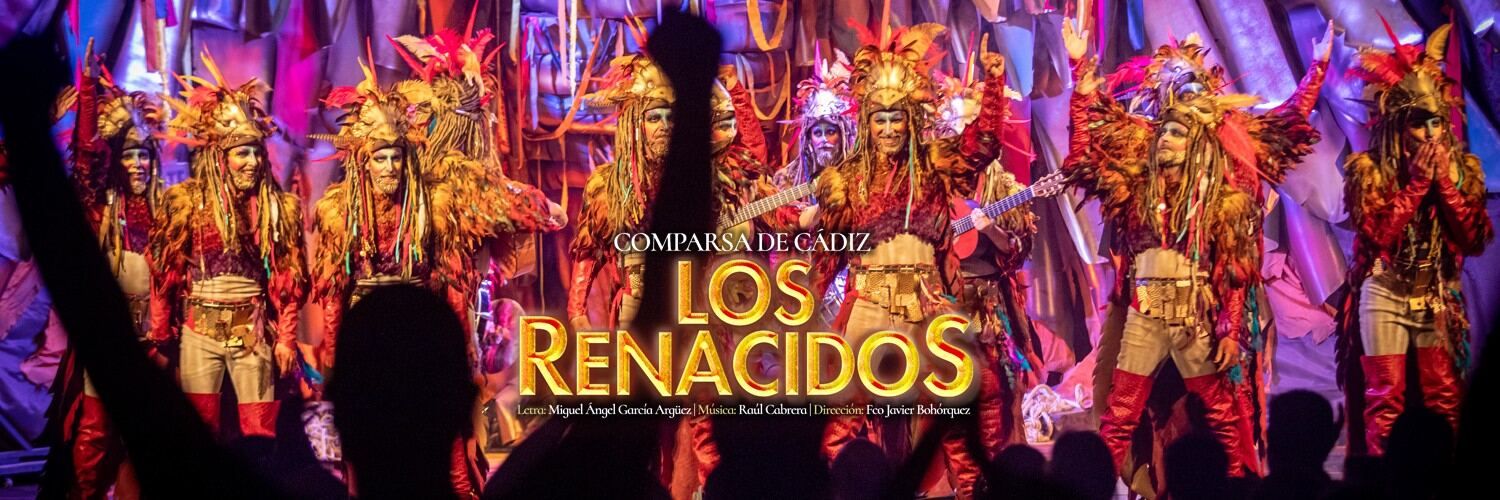
First quatrain: we find out who Los Renacidos are
It speaks directly to the listener, putting the focus on the nature of life, where the only permanent thing is change, a perpetual cycle: “Sabes que la vida nunca, nunca se detiene”. And with the first nod (of many) to Heraclitus and his idea of fire as the element of transformation.
Sabes que la vida nunca, nunca se detiene
Es como una rueda
Que en el fuego está girando
Gira, vuelve, cambia, se transforma
Nace y muere
Y hoy es la semilla
Que mañana será un árbol.
And that change is not only felt within us, but in every everyday aspect, material and immaterial, like the sun, the sea, “Ni las olas paran nunca su canción”, the grass, the wrinkles of the skin, the measuring of time “Ni las horas paran / Ni los siglos ni los días”. All the more so in the turbulent post-Covid era, where sensibilities are running high “Nunca se detiene /El tren furioso de estos tiempos”
Nunca se detiene
El sol cruzando por el cielo
Ni las horas paran
Ni los siglos ni los días
Nunca se detiene
El tren furioso de estos tiempos
No sé para nunca
Ni tu vida ni la mía
No para el mar
Ni las olas paran nunca su canción
Ni el tic-tac
Se detiene en el reloj
No para la hierba
Cuando brota de la tierra
Ni se paran los amores
Ni la arruga de tu piel
Ni los chiquillos que juegan
The endless circle, unstoppable like the songs of the people of Cádiz that are present in spring. A reference to the change of the carnival date “Que por mayo el milagro / De febrero y las aceras /Y que llego la vida nueva / El dios Momo está en la hoguera”
Todo gira y todo vuela
Todo corre sin freno
Todo pasa y todo queda
Que este año por fin
Ya reventó la primavera
Y ahora Cádiz es de color
Porque nada permanece
Porque todo se renueva
Ave fénix vuela, vuela
Que por mayo el milagro
De febrero y las aceras
Y que llego la vida nueva
El dios Momo está en la hoguera
Y hay un pueblo que celebra
Que por fin aquí no hay quien detenga
A las coplas de mi tierra
The music during this quatrain brims with optimism and vitality. It works as a positive reinforcement of the concept of permanent transformation, of the impossibility of stopping or pausing time, life. It urges you to take it as an advantage, with joy. It invites you to breathe in the change, to live it, to enjoy it. And how does it do it? By having the segundas, the coreaos, accompany the group, who sing each line exquisitely, without stridency, often like faint whispers in the background, with the guitar guiding the whole. The back row is a delight for the ear; if you pay attention, the amount of nuance is almost infinite and never repetitive.
Second quatrain: when Cádiz is fire
Correct me if I am wrong, but I think this is one of the few times that Cádiz is painted in other colours at Carnival. Miguel does not focus on the typical silver colour or the white of its alleyways. He brings onto his own turf a Cádiz of fire, reddish, but also indigo, bluish, scarlet, like a clean, clear flame.
No estoy de acuerdo con llamar
Taza de Plata
A una ciudad que es del color de la escarlata
Y el que diga que es de plata
Es que no ha mirado bien
Es escarlata porque hay fuego en todas partes
Fuego en el cielo si el sol renace
Fuego si las nubes arden
Detrás de San Sebastián
Fuegos blancos si la luna
Viene a enjuagarse en el mar
Fuego y roce en las campanas
Fuego en cada gaditana
Next, that fire does not only colour the most representative elements of Cádiz, but they are fire themselves; the balconies, the summer, passion, the mattress, the voice… are metaphorically part of it.
Y es el incendio azul de estos veranos
El fuego que bautiza a mis hermanos
Fuego añil en mi balcón
Fuego rojo en tu colchón
Fuego de oro en tus manos
Y es el incendio que desde estos mares
El mismito donde se bañó mi madre
Fuego grana en tu pasión
Fuego negro aquí en mi voz
Fuego y fuego que arde
It closes with three lines that serve as a crutch to reach the fourth “Cádiz…. …Es una canción en llamas” Rarely can so much be said with so little. They practically sum up the meaning and the feeling of the renacidos. Cádiz is a song in flames: song because it is the way we people of Cádiz live and experience the world. Song as a symbol of joy, of expression, of release… but in flames. That is, always alert, passionate, transforming, on the verge of burning, even more so during carnival.
Yo es que mire a donde mire
Veo solo fuego en su alma
Que Cádiz no es Taza de plata
Es una canción en llamas
Third quatrain: social criticism and commitment
The guitar changes the rhythm and we move into the most protest-driven quatrain of the popurrí. It reflects on the uncertainty of these times, times in which truths wobble, everything is questioned and everything is turned upside down. Heraclitus returns with the struggle of opposites (fire as the representation of the constant change of the sensible, the representation of a change that never ceases).
El mundo esta boca abajo
Llegan los nuevos tiempos
Y tos los libros de historia
Hay que escribirlos de nuevo
Lo antiguo vuelvo a nacer
Lo nuevo se ha hecho ya viejo
Lo que ayer era malo
Ahora resulta que es bueno
Lo que ayer era sano
Hoy por lo visto es veneno
Lo lleno ya está vacío
Y es el vacío el relleno
Politicians in carnival have been, are and will be a target of criticism, as well as everyone who holds power or aspires to it. Argüez, in a single word “telepredicadores”, has defined the lawmakers as heralds of ideological-religious truth, as representatives of good and evil, as guardians of the justice of what is right and immaculate.
Los telepredicadores
Gritan desde el parlamento
Y los que alzaron su voz
En nombre de la libertad
Se han vuelto tus carceleros
Then he narrows it down even further, worried about how the far right is occupying the traditional spaces of the working class “Los fascistas hoy recorren / Los barrios de los obreros” He describes how the class struggle is deliberately blurred by these groups.
Since the left is more concerned with defining what the left is and is not, they see internal ideological debate as disloyalty and external debate as the enemy. “Y la izquierda con nuevas biblias/Impone sus evangelios”. So much tension makes us turn against one another.
Los fascistas hoy recorren
Los barrios de los obreros
Y la izquierda con nueva biblias
Impone sus evangelios
Los que piden democracia
Son talibanes armados
Y el tirano es camarada
Y el camarada un tirano
The role of carnival authors in this political scenario is disappointing and perfunctory for Miguel Ángel “Y en el carnaval los poetas /Hoy se han vuelto funcionarios” or simply a job “Los que ayer eran artistas /Hoy solo son mercenarios”
Y en el carnaval los poetas
Hoy se han vuelto funcionarios
Los que ayer eran artistas
Hoy solo son mercenarios
And he ends with a rallying cry in the face of so much chaos: forget the past and move forward. Or perhaps: do not forget the past, simply pass it through the sieve of transforming fire to create something new, the solution.
Todo cambia nada queda
Han llegado nuevos tiempos
Tira tus libros de historia
Tira tus libros de historia
Pa que ardan en el fuego
Pa que ardan en el fuego
Fourth quatrain: Cádiz as a phoenix
We jump to the next quatrain with a “pa pa pa…” as a link from the back row, which bathes it harmoniously, perfectly in tune, flowing without pause through that transition with no instrument but the voice.
The phoenix spreads its wings, giving back its reflection in the mirror to every “Gaditanos, gaditanas”. Its three millennia, the streets, the children, the destiny…
Gaditanos, gaditanas
Míralos de frente
Son igual que el ave fénix
Renaciendo siempre
Tres mil años y sigue aquí mi gente
Con sus vidas
Sus calles
Sus hijos
Su suerte
A necessary assertion of industry, and especially of Cádiz's shipbuilding, always so punished, but getting back up.
Renaciendo de una industria con futuro incierto
De unos barcos
Que no regresan a este puerto
Golpe a golpe y sigue renaciendo
De su pena
Sus ruinas
Su daño
Su sueño
The following stanzas recall the calamities that the people of Cádiz have historically gone through and how they have managed to recover from them. It warns about a destructive kind of tourism, the rebelliousness of the voices in their coplas and guitars, the danger of fascism tinting its blackness, and poverty as a palpable reality.
Cádiz
Renace de explosiones y de maremotos
Cádiz
Y del turismo ciego que hoy lo arrasa todo
Y renacen sus guitarras
Sus cantos rebeldes y sus gargantas
Siguen renaciendo como antes renacían
Del fascismo negro
Y de la negra tiranía
Y renace en cada mesa
Donde se codea la pobreza
Y en cada barquilla
Cuando nuestros barcos cesan
Y renace en cada joven nuestro que regresa
Then, the last two stanzas spring back up like coils to remind us that “no hay cenizas tristes”, that the past is the springboard to go forward, above all among the young who come back. To end with the very clear life-affirming tribute to Juan Carlos Aragón and his “Cádiz resiste”
Gaditanos, gaditanas
No hay cenizas tristes
Que del barro de la historia
Siempre renaciste
Por eso Cádiz existe
Insiste
Persiste
Cádiz resiste
Fifth quatrain: a song to life
The final point and farewell of the popurrí is a plea for life “Y si has vuelto a renacer / Agárrate a la vida como un sueño” above all if you have had a stumble along the way.
Y si has vuelto a renacer
Agárrate a la vida como un sueño
Vuelve a ser niño otra vez
Y aviva la cantera del deseo
Rompe las barreras
Celebra cada trago y cada herida
Pa que hiervan en tu corazón
Las llamas que te llaman a la vida
Not much more to add, since every line from here on is a joy, a life-affirming fervour, almost danceable at times, an invitation to constant optimism, the personification of Cádiz as an inextinguishable, purifying and motivating being: “Vida nueva”, “Primavera”, “baila en la fuego”, “duerme con el corazón”, “Haz el loco y el amor”
Also remembering those who are gone “Y si de lo que queda atrás / Yo guardo algo / Compañero de mi alma /Es recordar la vida eterna / Que a tu lado /Codo a codo yo viví” If you look closely, the choruses add, only during this stanza, the famous line «Creo en el espíritu libre y santo» from Juan Carlos Aragón's Credo.
Los Renacidos, en Oratorio San Felipe @ComparsaArguez pic.twitter.com/54oJcZShC0Vida nueva
Pa que mi copla vuelva a florecer
Primavera
Y el mundo entero ha vuelto a renacer
Baila en el fuego
Y dale amor
A cada cuerpo que tengas a tu lado
Levanta y salta
Ama y grita
Que la vida no da otra oportunidad
Duerme con el corazón
Y agarra cada día hasta vivirlo
Haz el loco y el amor
Demuéstrale a la vida
Que estas vivo
La vida siempre la vida
Con sus dos manos en llamas
Olvida todo lo que queda atrás
Y vente conmigo a volar
Vida nueva
Que estalla como el fuego de un volcán
Primavera
Para que el fénix vuele en libertad
Y si de lo que queda atrás
Yo guardo algo
Compañero de mi alma
Es recordar la vida eterna
Que a tu lado
Codo a codo yo viví
Vida nueva (Coros)
Primavera (Coros)
Cádiz volcán
Ardiendo en el mar
Mi tierra, mi madre y mi casa
Danos tu luz
Dorada y azul
Pa hacernos arder en tus brasas
Cádiz no dejes a tu pueblo arrecio
Danos tu fuego pa no pasar frio
Tu fuego
Que es tuyo
Que es mío
Que hoy mi gente ha renacio
Que hoy mi gente ha renacio
Que hoy mi gente ha renacio
In short, a masterpiece of a popurrí that will forever stand on the podium of the great classics of the Cádiz Carnival. The tandem Raúl + Miguel + Group is simply sublime or, as we say in Cádiz: “De pellizco y bellito de punta”.
Extra details from the street during the 2022 carnival
https://twitter.com/Badawidecadi/status/1534082026290167808
Los Renacidos en Plaza Mina @ComparsaArguez pic.twitter.com/13BibhXPOtMuero aquí ❤️🔥 @ComparsaArguez pic.twitter.com/m0zY7jPvZzKeep reading
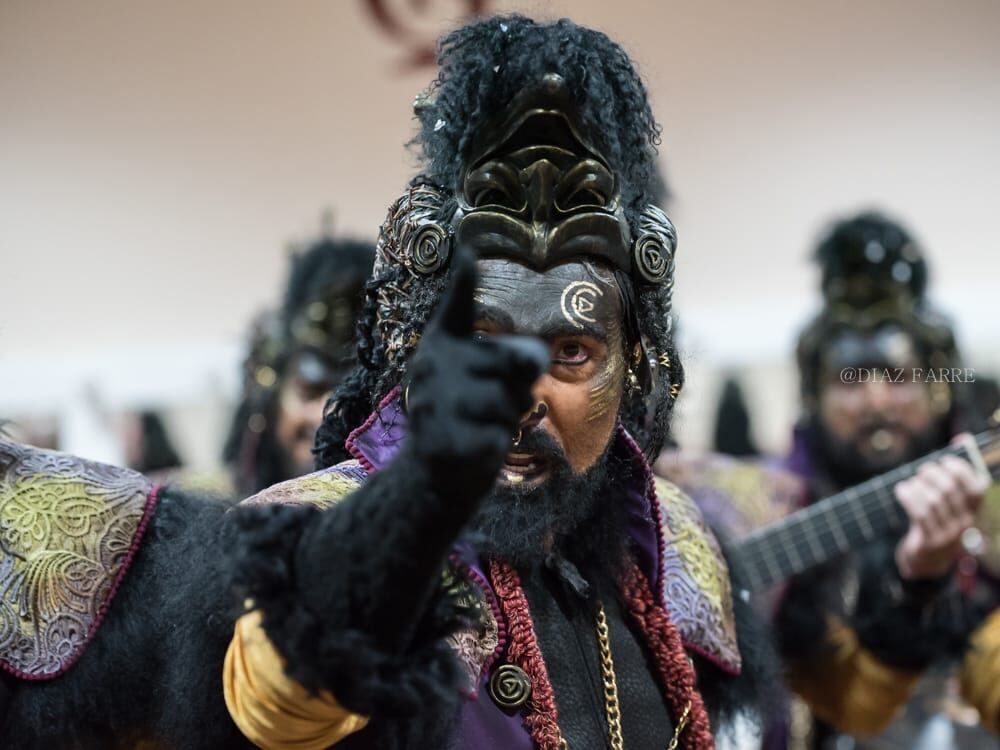
Analysis of the popurrí of La Oveja Negra
I'm back once again with a literary analysis with philosophical overtones (the music I leave to the musicians), written from the subjectivity of someone who is trying to offer a view of the text and subtext without fanaticism or academicism.
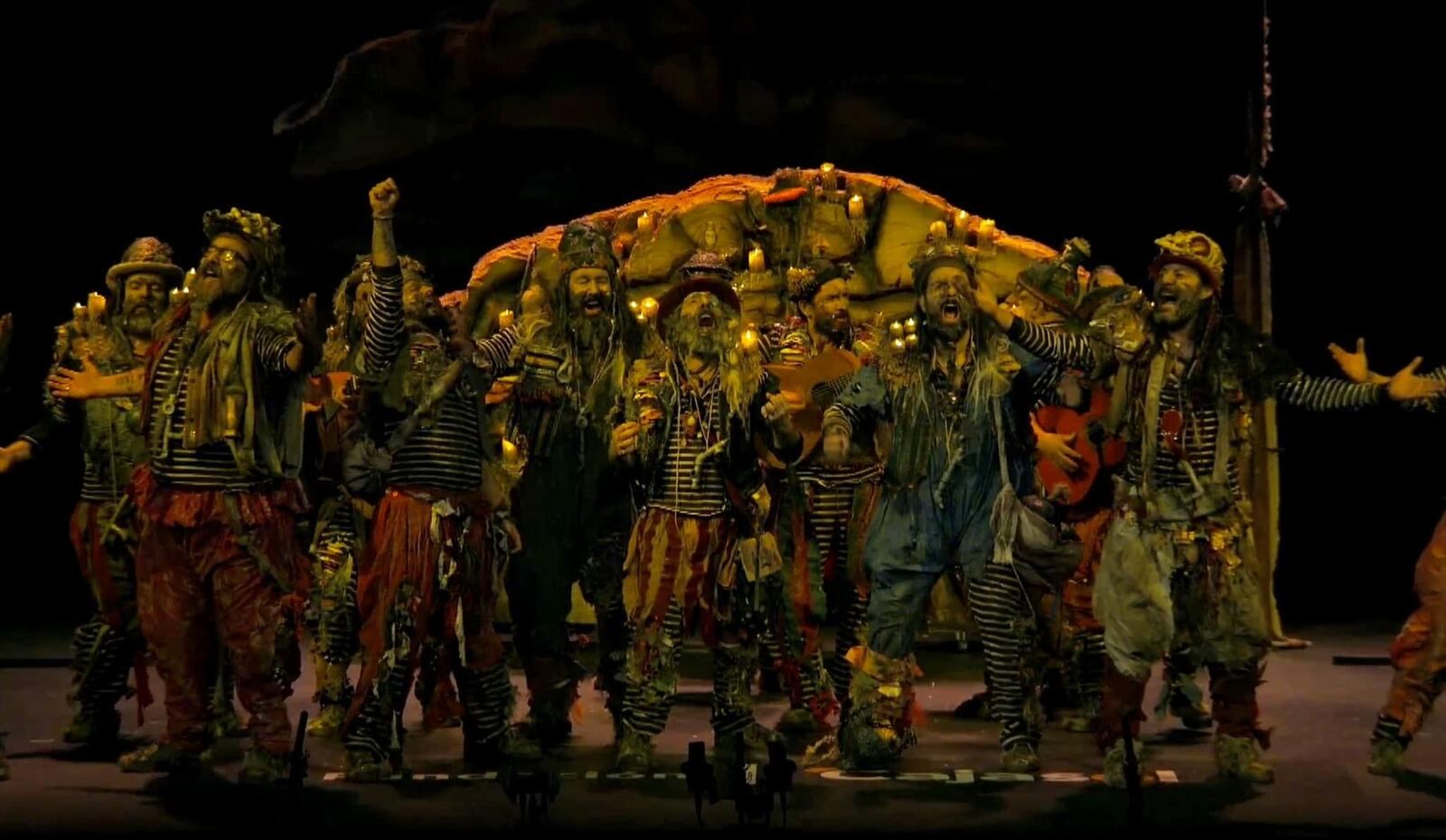
Analysis of the popurrí of La ciudad invisible
Analysis of Antonio Martínez Ares's popurrí this year, 2023, with his comparsa «La ciudad invisible», focusing on the performance, musically splendid and full of comparsa details from the 1990s.
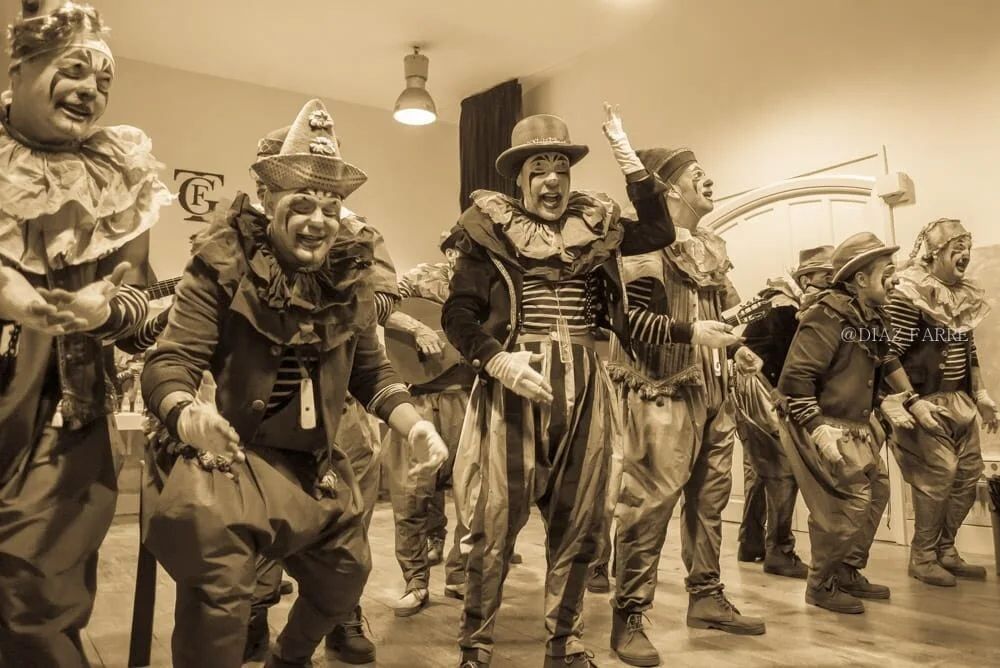
Carnival: Analysis of the popurrí of Los Sumisos
The bass drum gives way to the snare, the cymbals in the form of a tinkle, the guitars prepare the arrival of the punteao, a sound closer to the Cuban Alameda than to the Cádiz one introduces us to the first quatrain.